
BUMPY RIDES, BUMPY MINDS
Written by Mark Aspiras and Janelle Santos
In a world that continues to move at a relentless pace, most of us often pass through our daily routines without much thought. These familiar and repeated moments go unnoticed, yet they shape how people understand and experience life itself.Different stories happen inside public transport as strangers come from different corners, each carrying fragments of lives that will never fully meet. And yet, for a brief stretch on the road, they share the same intention: to get down, to arrive, and get to wherever it is they are meant to be.Our feet carry us toward the destinations we intend to reach, yet in unexpected moments—in the sudden lurch of a moving vehicle and in the fleeting glimpse caught during brief stops—our minds are pulled somewhere deeper, drifting into reflections that stretch far beyond the road.

For Dave Quigao, a journalism student who has spent nearly four years commuting through Pateros, Taguig, Pasig, and Quezon City, the route becomes more than just a passage to get where he needs to be. It turns into a bridge not only for survival, but to a deeper awareness of life as it unfolds around him. His commute as a college student is not one continuous journey but segmented, broken into transfers, and in motion.During long bus rides, Dave finds himself observing the city in fragments. “Madalas kasi ako [mag] people-watching, lahat na ng pwedeng tingnan—building, condo, mall, lahat ng establishments, kotse, truck,” Dave explained.From what begins as a point of observation, it soon turns into a point for reflection. His commute becomes more than distance covered; it becomes time lived in motion where the city is observed piece by piece, and where progress is measured not only in arrival but in the steady endurance of moving through it.Over four years of commuting, Dave’s nth ride felt different from the first—not because the route changed, but because his awareness did. Time felt both stretched and constricted—often “lost” in traffic for more than two hours a day, while body time adapted with short sleep, fatigue, and constant movement. Instead of feeling like a break, the commute became a reminder of how much time is spent just getting through the city.
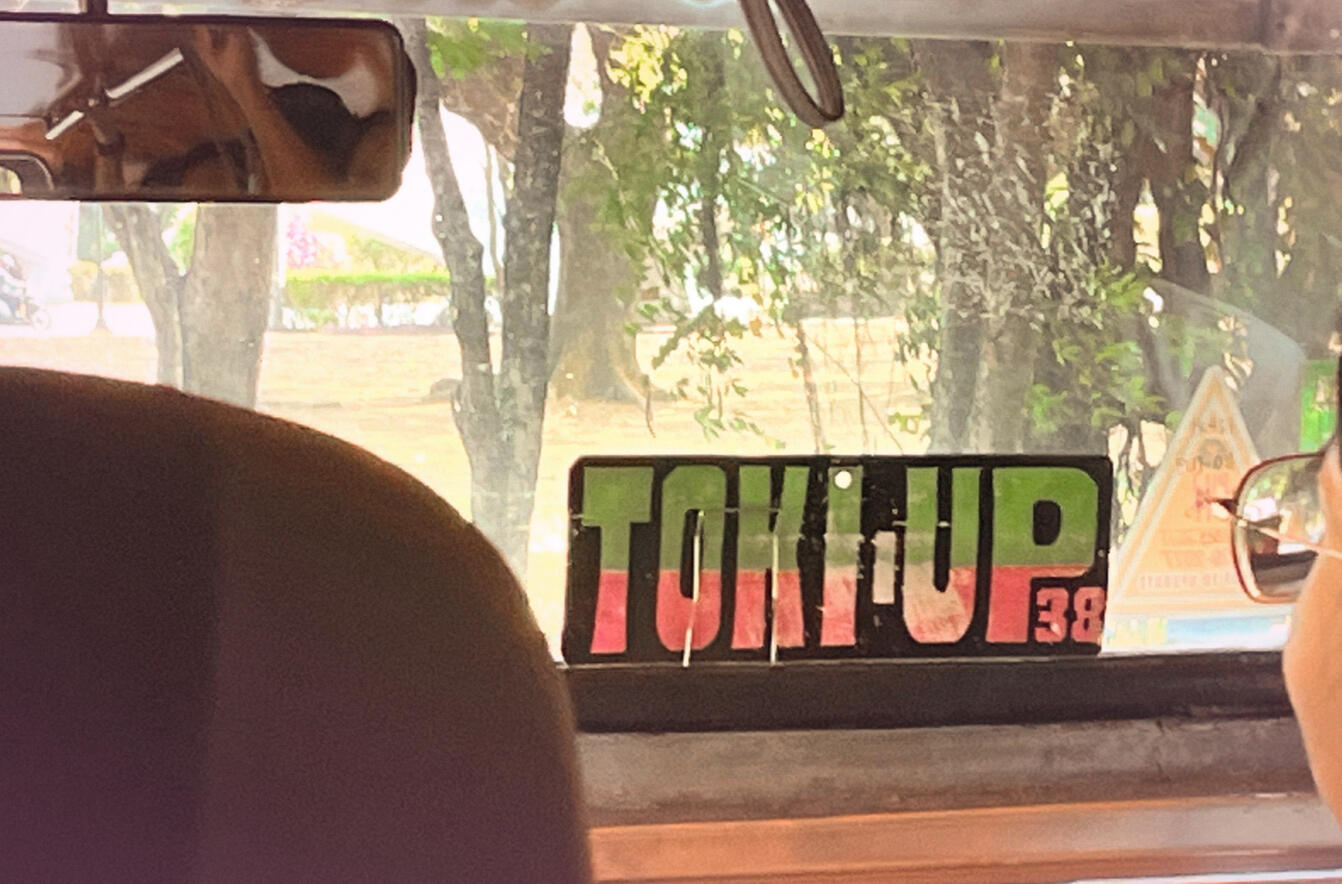
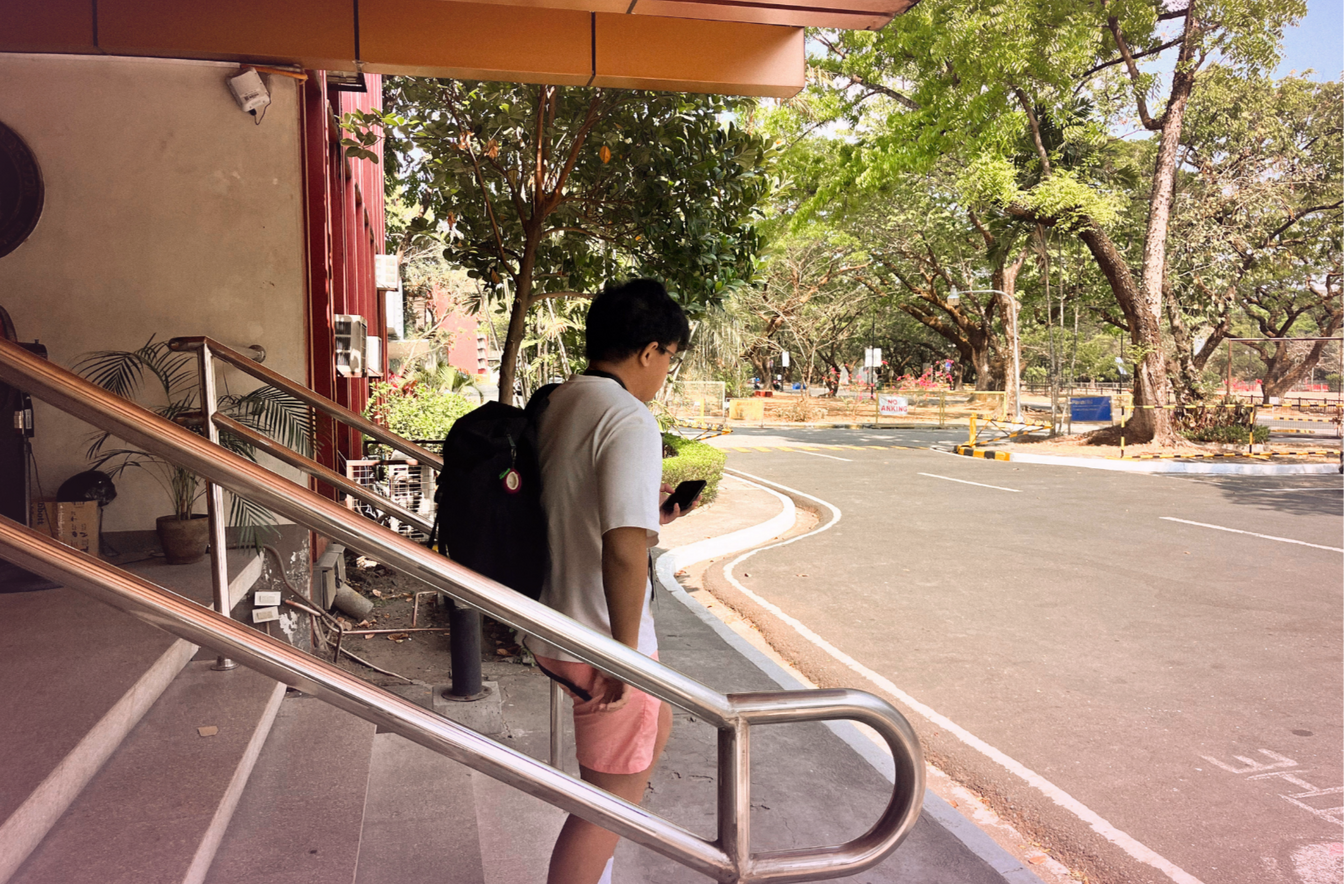
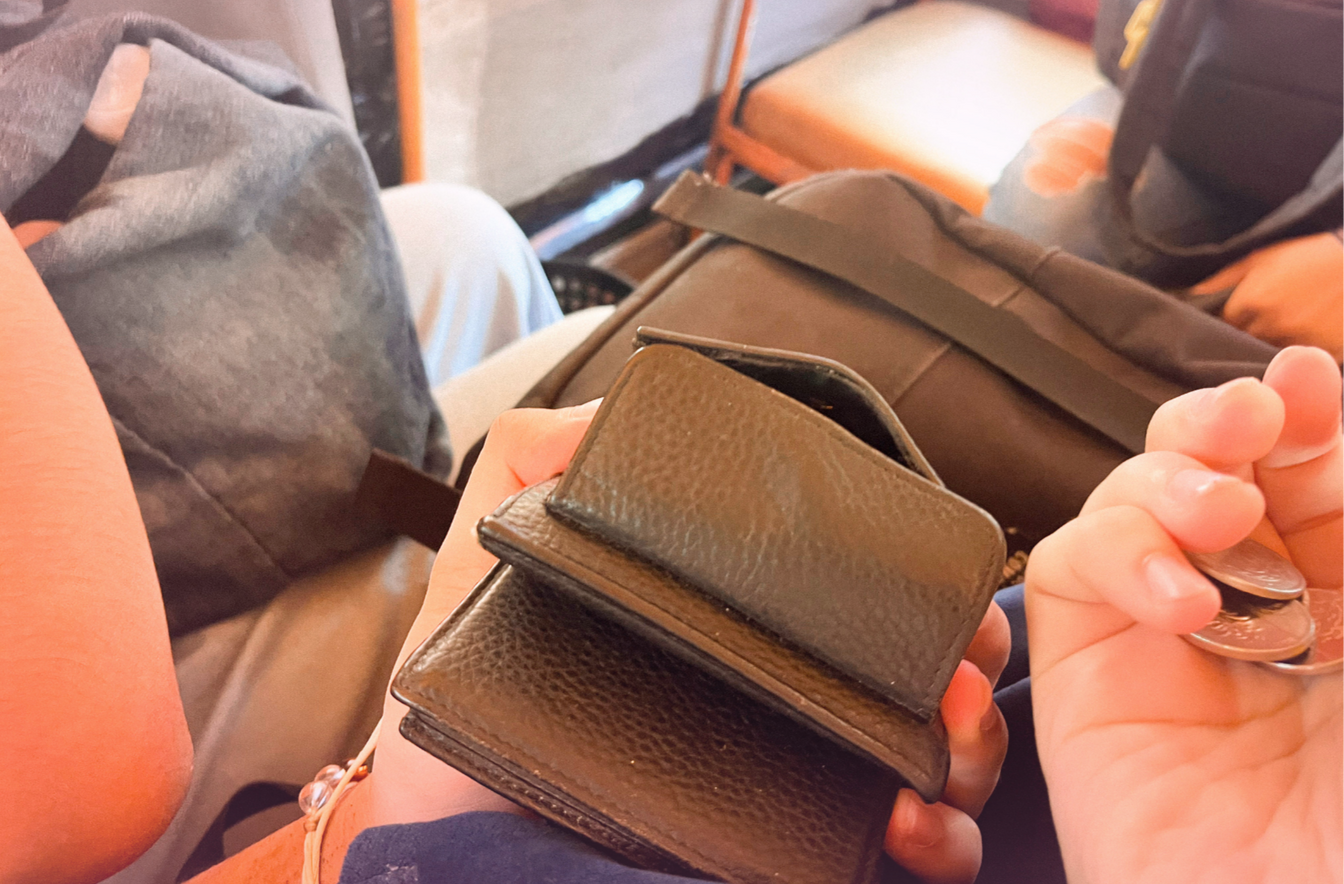
When rush hour arrives, even the idea of choice disappears; ride-hailing apps replace the bus, not out of convenience, but necessity. People like Dave endure commuting during these peak hours because school and work operate on fixed schedules that cannot be avoided or delayed. For many, time is a luxury they cannot afford to lose, so they are pushed to move during rush hours despite the congestion, exhaustion, and discomfort, simply to make it on time and keep up with varying responsibilities.“Basically, ang daming oras na nasasayang. And alam natin na 'yung oras natin is not free,” Dave emphasized. “Talagang pinapahalagahan natin 'yun at pinapahalagahan din natin 'yung oras ng iba.”Within the hum of engines and the shifting routes, there is a strong chant for himself to keep going, to reach the next point of arrival, and to find something that brings a quiet sense of relief ahead. In between stops and destinations, different experiences unfold for every passenger—fragmented, personal, unshared.The mutual routes between students, workers, and commuters reveal both similarity and imbalance. We are moving through the same roads, yet carrying different urgencies and contexts. Yet despite these differences, each one returns to the same quiet act of looking forward, of moving toward where they are meant to be. Looking forward is not only about progress in a straight line, but also about the moments we stop to breathe and shift paths. Towards our destination, we never stop moving, even in silence.

Rey Catarina, another Isko commuter, has a daily ride that is a series of bumps that blur his thoughts. Amid the transient transit lies a marathon in his mind. It has a start, but the journey to get to the end is brash. Hurdles of what-ifs manifest mentally during the commute.Even as a hotel, restaurant, and institution management student, he deals with the anxiety of navigating the arduous Filipino commute while balancing heavy, clunky cooking equipment. “It's a hurdle you have to go through instead of resting after school,” Rey noted.Time may seem like it is spent on nothing as he sits on the plastic-covered seats of the different vehicles he rides, but it is in these empty spaces that our minds start to drift back. His mind keeps track of things he has missed, like movies still unwatched because of a busy semester, or the brief, passing chatter of a lady who only intended to ask him for directions at first. In between the numerous ‘bayad po’s, Rey himself ponders about his life.“When I’m on my way home, I don’t use my phone because I’m tired. I just sit still and reflect on the entire day—what happened, what I’ll be doing when I get home, and what I’ll do the following week. I let what’s happening “be” without overthinking it,” he notes. As he carries the exterior of a student, he also bears the determination of a commuter wanting to get back home.“No matter how much I emphasize that it's a hassle, it still serves as a break,” Rey says. “It gives me time to process what just happened before I fully have to start my tasks at home.”From the window, Rey sees the shining headlights of fellow students’ cars. And while he does not share their experience, he observes them with a quiet empathy, “I’ve realized that there’s such a big gap, but [I’m] not [going] to villainize ‘yung mga may kotse.” He knows that even if they have their own cars, they still are forced to deal with pockets of isolation, stuck with themselves in traffic.Whether behind a steering wheel or seated beside a stranger, everyone is just bringing themselves somewhere. Even as we navigate busy lanes differently, we remain bound by the same forced patience. The road humbles you, regardless of what vehicle brings you to your destination.There are a variety of people with unfamiliar faces walking alongside him. A community forms in spite of everyone ultimately reaching different ends. “There’s a sense of mystery with the people you ride with, but you know they’re alive and surviving just like you. It’s beautiful to know you’re not alone in the world,” he reflects.His mind, unable to shut up, wonders what else has to be done. The journey his mind takes is long enough that it does not end—even at his next stop. Unlike his seated position, his mind moves. In university, his classes teach him to dissect the world at an orderly pace, but the road demands an immediate effort to absorb how the world truly works.Rey learns a lot in school, yet his true syllabus lies in the reality of commuting. There is something he cannot learn from inside the classroom—something that only reflects in the calloused hands of the jeepney driver. He learns about desperation when sweat from a stranger grazes his arm in a rush to go home.He is no longer a student occupying a coordinate in a vehicle. He is one with the transit. The humidity acting as his second skin, the blasting music of the jeep becomes the answer to his questions. Everything is loud, but everything is placed just where it functions best. Altogether, this culmination of friction creates realizations. “I often feel like the ride was too fast. Especially when I’m on my way to class, I wish it lasted longer so I could have more time to rest or have time for myself,” Rey says.
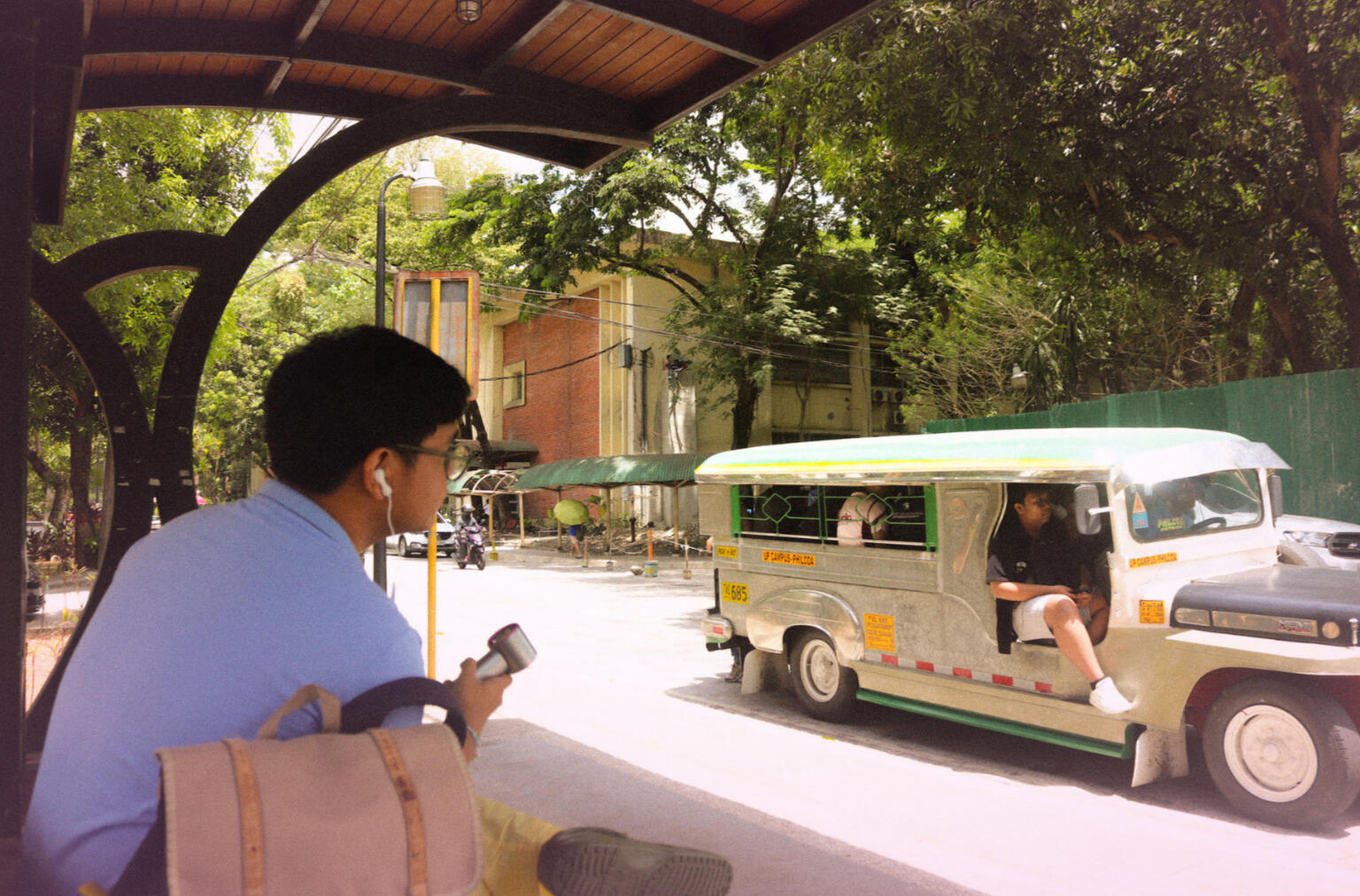
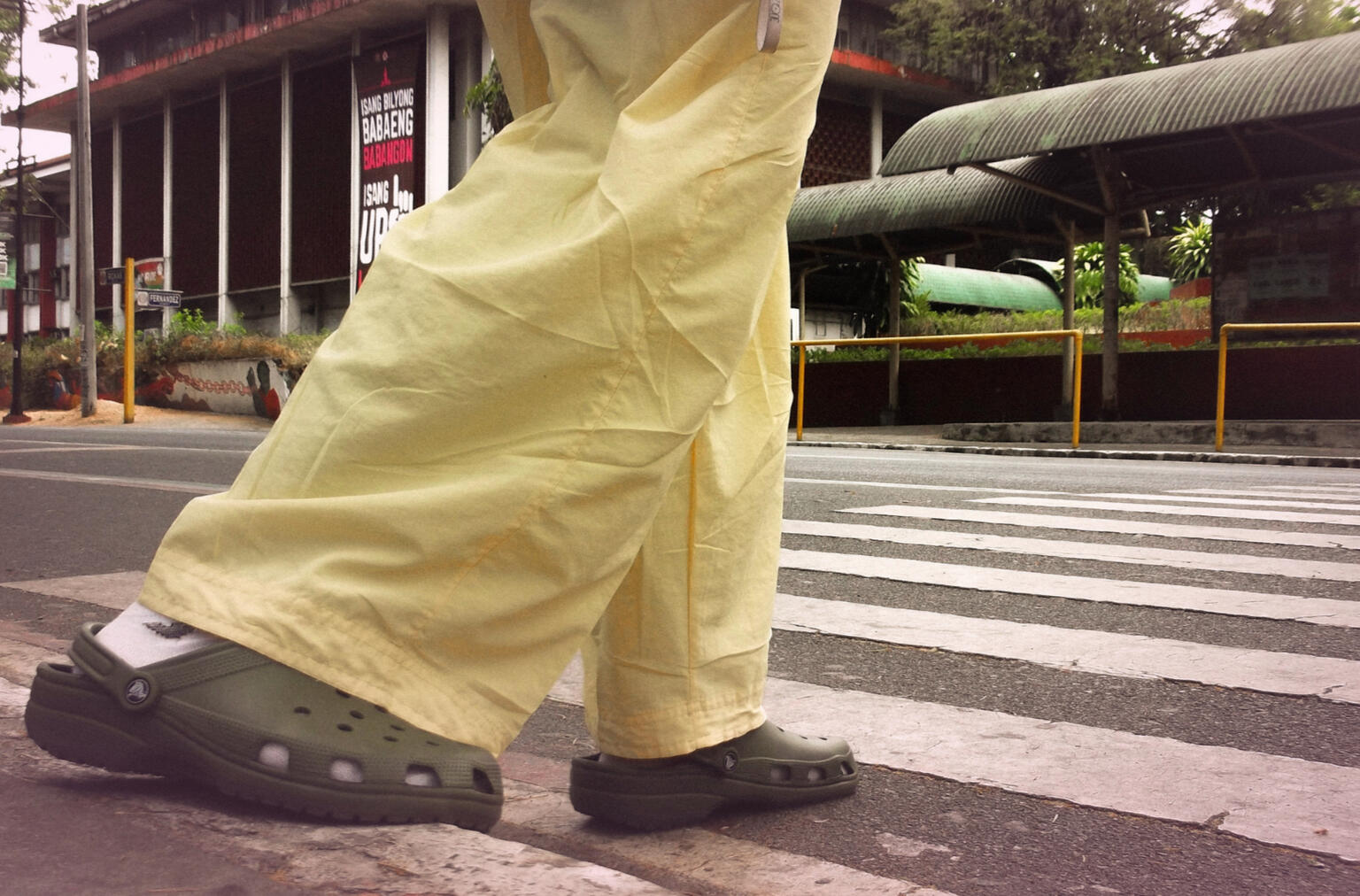
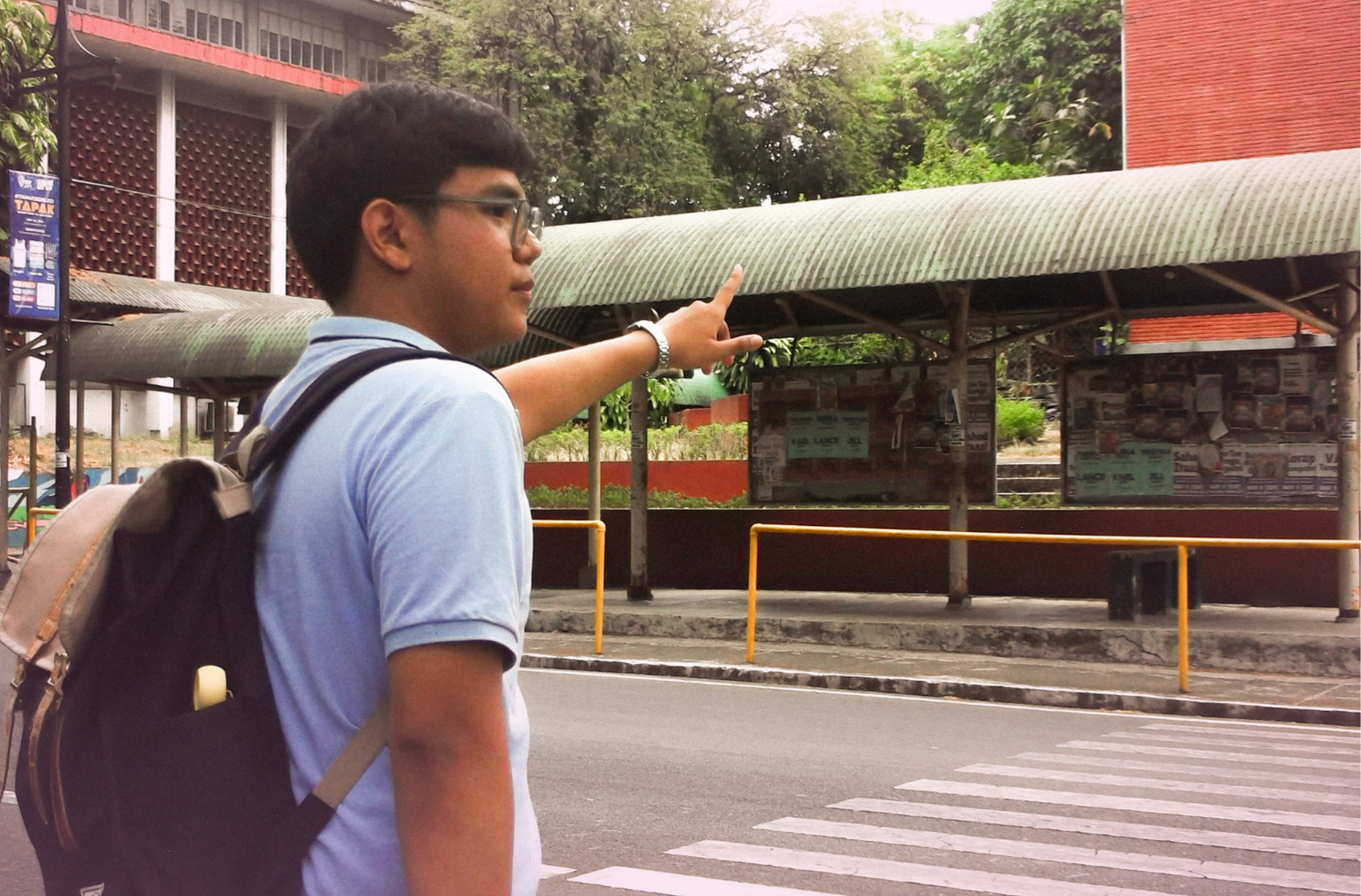
The time you spend in between your destinations teaches you how to be independent, responsible, and conscious—of time as hours drift away in a gridlock, of others as you become mindful, and of how you seat yourself when the jeep is full. It is a subtle, yet impactful, collective maturity that is forged not in a vacuum, but shared in a packed space.But this freightage is not unique to Dave and Rey; it is an experience shared by every student. Inside jeepneys, buses, trains, and crowded sidewalks, people are suspended between who they were before the ride and who they must become after it. The university itself mirrors this condition: a place of transition where students move through uncertainty and endurance.The person we were when we first set foot on campus has gone through countless transformations. The university not only provides us a degree, but also a destination—one where we can continue to forge our own path even after the ride ends.We stare at the seats we once fought for and the ordinary days we rushed through. But as the ride slows and the familiar stops begin to feel numbered, we realize that maybe the journey was the destination all along.Every time you get off at a stop, you land in a kind of pause. Then your eyes grow heavier, and everything powers down, even you. But there’s always another blurred ride, more money spent, more energy drained. Life stretches out like the road before you, a journey that does stop but never quite ends.Tomorrow, we will traverse the same routes until something shifts and new meaning slips in. The time we spend on these rides feels cyclical—circular, even—until we begin to move away from looking at it as the same old routine we’ve grown accustomed to. Every route may lead to the same destinations, but no passenger arrives exactly the same person they were when they first boarded.
© Maroon FM. All rights reserved.